WE WANT JUSTICE FOR THE UNIPORT 4.
Author Archives: Professor Vincent Icheku

WE WANT JUSTICE FOR THE UNIPORT 4
“I want justice to prevail because the children were innocent. The community had no right to do what they did. I am appealing to government and human right bodies to stand firmly behind families of the children to fight for justice.” This statement is attributed to the father of Lloyd Michael.Michael is one of the four students at the University of Port-Harcourt (UNIPORT) whose life was brutally cut shot at Omuokiri-Aluu community on Friday, 5 October 2012. His crime, as reported in Vanguad Newspaper October 13 2012 was alleged theft of computers and mobile phones.
Not only do we want justice for Michael, we want justice for all four (UNIPORT 4). The other three students murdered were; Tekena Elkanah, Ugonna Obuzor, and Chidiaka Biringa. It seems as though, we have lost our humanity and turned our institutions of learning into a ‘killing field’. These gruesome killings and disregard for the sanctity of human life set a dangerous precedent that must be stopped before Nigeria becomes, as one writer, Bayo Oluwasanmi, puts it, ‘home for abandoned monster of cruelty.’ Not only will it become such as aforementioned, it has the potential to become ‘home for the material for all the evils in the world’.
Everyone’s right to life is protected by law. No person shall be deprived of his/her life intentionally, except in the execution of a sentence from a court following a conviction provided by law. The human rights are naturally accruable to every person by virtue of his/her existence as a human being.
Those who think that Nigeria has no law will be surprised to note that the Nigerian Constitution, under Chapter IV, enumerates, among other fundamental rights; right to life, right to dignity of human persons, right to a fair hearing etc. The Government of Nigeria, as a member of the UN Human Rights Council, should uphold the highest standards in the field of human rights.
Respect for human rights is necessary for the rule of law, which requires that government must be subjected to an enduring legal duties. Such legal duties include respect for human rights and any government which is not subject to such legal duties quickly becomes despotic.
The incessant extra judicial killings in Nigeria attest to the fact that the protection of human rights has been ignored or sidelined. This culminates in individuals and groups taking the law into their own hands. The Nigerian authorities must take decisive action to tackle the systemic and widespread killing of innocent Nigerians. It seems to me that authorities have effectively turned a blind eye to the killing epidemic. A government that fails to uphold human rights should have no claim on the loyalty or obedience of the people within its jurisdiction.
Extra judicial killings are prohibited by the Nigerian Constitution and various international laws that Nigeria has ratified. Where any person’s life is unlawfully taken, it is extra judicial killing and a breach of the person’s right to life (section 33; basic rights of all Nigerians under Chapter IV of the 1999 Constitution of The Federal Republic of Nigeria). The law provides that the culprit must be prosecuted while the surviving victims are entitled to an apology and compensation. The National Human Rights Commission of Nigeria (NHRC) deals with violation of human rights in Nigeria. It helps to ensure prosecution of offenders through the Attorney General and the Inspector General of police.
Right to fair hearing which was denied to the UNIPORT 4 is a breach of their right under section 36. This section provides that in ‘the determination of any Nigerian’s civil rights and obligations against any person, government or authority, he/she is entitled to a fair hearing within a reasonable time by a court established by law and constituted in a manner to secure its independence and impartiality’. In addition, any person charged with a criminal offence is presumed innocent until guilt is proven.
There is a clear violation of the UNIPORT 4’s right to life under s.33 and right to a fair hearing under s.36, Chapter IV of the 1999 Constitution of The Federal Republic of Nigeria. The Nigerian authorities should, therefore, be held to account for the failure to take immediate and necessary steps to stop the abuse of their human rights. The demand for justice for their gruesome murder is a just and noble one.
The standard of proof for any criminal offence is ‘beyond reasonable doubt’. This means that before a conviction is sought, the jurors must be sure beyond the ordinary reasonable doubt one would have given any situation. There are two versions of criminal allegations put forward against the UNIPORT 4 in the public domain. The first was that the owner of the laptops and mobile phones they were trying to steal caught them and screamed “Thieves! Thieves!” The scream attracted the village vigilantes who carried out a citizen’s arrest and the subsequent extra judicial killings. The second version was a case of debt collection. According to reports, the four went to Aluu village to collect an outstanding debt. The debtor refused to pay culminating in protracted argument and subsequent fracas. The attempt to seize the debtor’s goods i.e. laptops and mobile phones prompted the accusation of theft. This later version is more plausible and more likely scenario. The unfortunate incidence took place at a time Aluu community was on edge having suffered from spates of armed-robberies. The four seem to have been made scapegoat and executed by the village vigilantes as soon as they were proclaimed thieves and having gained the support of their village head. There is no need to run for dear life, if they felt, they had done nothing wrong. As people say, ‘it is only a guilty conscience that fears accusation’.
The UNIPORT 4 deserves justice. Aluu village vigilantes would have to explain to the public how they entrapped the four young men and murdered them in cold blood. What have they done? Even if they were involved in any kind of robbery, do they deserve the brutality and terror unleashed on them? Does the punishment fit the crime? What about their rights to fair hearing and innocent until proven guilty?
We should all do whatever we can to achieve justice for them. We must not allow those behind this to go unpunished as failure would make our students more vulnerable to brutal attacks from the likes of Aluu vigilante group. Justice must be done or, at last, be seen to be done. Nothing less will be good enough.
We noted from the Vanguard report that the parents of the slain four has expressed a lack of confidence in the ability of the Rivers State Police Command to investigate the matter. If so, the families should go public using social network media. They should set up an online petition to the NHRC, JUSTICE for UNIPORT 4 Face book page and twitter handles. These would help raise the profile of the case and attract the attention of both national and international civil right organisations and hopefully garner financial and moral support they need to achieve justice for the UNIPORT 4.
Degenerative diseases of ageing:causes and preventions by Dr. Vincent Icheku

Short description
The book suggests how you can cut your risk of dying from degenerative diseases and give yourself the chance of not just a longer life but a better quality of life. The book provides a background discussion on danger signs of ageing and their remedies. It examines exciting new research evidence in the anti-ageing field involving a new understanding of what goes on deep inside the human cells that causes you to grow old prematurely. It also examines scientific evidence on how radiation from mobile phones could cause age-related damage to your health and how to protect yourself from the effects of such radiation. Your will read about hormonal imbalance in relation to premature ageing. The information on current treatment to maintain hormonal balance is a synthesis of the consolidated findings of many world class organisations committed to anti-ageing research. You will also read about current breakthroughs in the application of cloning and stem cell technology to the treatment of ageing diseases, and about ethical obstacles to the methods. The writers view is that for the technologies to realise its full potentials, both scientific and ethical problems must be overcome. Finally, you will read about the importance of vitamins and minerals, water, salt and physical exercise. The book concludes with recommendations on how to maintain general good health and prevent degenerative diseases by taking a broad spectrum of multi-vitamins and minerals, eating healthy diet, doing sensible daily exercises and learning good stress management.
Long description
The capacity to enjoy life well into your old age is sometimes denied by all kinds of degenerative diseases. Regrettably, the information you need to enable you to prevent these diseases is found in hundreds of scientific papers that are not easily accessible to the general public. The result is that most people suffer from these diseases and die prematurely while knowledge of how to prevent or cure their condition already exists. For the first time, the work of many world scientists concerned with the causes and preventions of degenerative diseases of ageing have been put together in a single book, and I hope you will find it useful in your quest for good health and an increased life span.
Dr. Ronald Klatz D.O. (M.D.), the founder and president of the American Academy of Anti-Ageing Medicine in Chicago, ,USA an organisation that trains physicians in anti-ageing medicine, and author of Grow Young with HGH (Harper Perennial, 1998), stated that “ageing as we know it is really a constellation of degenerative processes that lead to chronic disease and finally to death.” He added that “you can prevent and treat the conditions of ageing like osteoporosis, Alzheimer’s disease, macular degeneration, and cognitive decline. And by treating them, you change how you can expect to look like at age 50 or 90 and by improving the quality of life and avoiding activities or food, for example things that are going to kill you, such as those causing heart disease and cancer, you live longer.”
Similarly, Jean Carper, a leading authority on health and nutrition, and the author of numerous books, including Stop Ageing Now, explains that the “ravages of ageing are not inevitable and in fact, can be prevented or reversed”. Citing Dr. Irwin H. Rosenberg of the Department of Agriculture’s Human Nutrition Research Centre, United States, Jean further explains that most diseases associated with ageing can be prevented or reversed with the help of vitamins.
Dr. Paul Clayton, a research director of practitioner training at the Royal College of General Practitioners, a senior lecturer at the Institute of Optimum Nutrition at the University of Middlesex and author of many books, including Health Defence, wrote that “very few people, perhaps 1 in 10,000, die of old age. The vast majority of us sicken and die prematurely, picked off by natural causes long before our biological life span has run its course”.
In other words, chances are the majority of us will die from degenerative diseases before our biological age runs out. The term “degenerative diseases” has been used as a medical term to describe progressive diseases of the central nervous system (the brain and spinal cord). In this book, the term has been loosely applied to numerous severe health conditions associated with ageing. Many of the health conditions have been implicated in the majority of all deaths through natural causes. Deaths by natural causes are deaths caused by naturally occurring diseases (see online encyclopedia, Wikipedia).
To the best of my knowledge, there is no recorded evidence of death from old age; the majority of deaths are due to natural causes. The 2002 world report on Violence and Health published by the World Health Organization (WHO, Geneva) identified ischemic heart disease, cerebrovascular disease, lower respiratory infections, chronic obstructive pulmonary disease, cancer, atherosclerosis and diabetes as among the 10 major causes of death in all 38 of its member states in the mid-1990s. Dr. Clayton, cited earlier, stated that, if you can cut your risk of dyeing from these degenerative diseases, you automatically give yourself the chance of not just a longer life but a longer quality of life. The information on how to cut the risks of dyeing from degenerative diseases is contained in hundreds of medical discoveries and trials published in internationally recognised scientific journals on which this book is based.
This book presents the findings of studies of the present state of knowledge regarding the causes and preventions of degenerative diseases of ageing using evidence from a systematic review of scientific literature. A systematic review as used in this book involves a formalised approach to identifying and synthesising the results of research studies, especially controlled trials, and dissemination of subsequent information for the benefit of the general public. By using this approach, it became possible to review most of the world’s best-known scientific research on methods of preventing the ravages of degenerative diseases of ageing and extension of maximum life span. The outcome of the systematic review is presented in the five chapters of this book.
To Order this book visit: http://www.sgwilliamspublishing.co.uk/Health-and-Social-Care.html
New Book: Understanding ethics and ethical decision making by Dr. Vincent Icheku
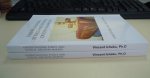
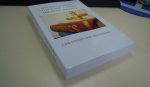
About the book: “Ethics and ethical decision making: Case studies and discussions”
This book is mainly written for nursing and social work students but is firmly grounded in practice examples. The intention is to prepare the students to deal with ethical problems in practice placement. Thus, the book discusses, among other things, the ethical theories and principles, and uses case study discussions to demonstrate application of the ethical theories, principles, and models to practice problems.
Peers Review and Endorsements
“The book drew from the work of many scholars and designed a simple model to help students gain the knowledge of ethical analysis and decision making”. Vidal Johnson, Senior Lecturer in Law and Ethics, London South Bank University
“I was impressed by the way this author consistently addressed both social work and nursing ethical issues, highlighting the importance of ethics and application in nursing and social work practice”. Michelle Evans, Senior lecturer in Learning Disability/Mental Health and Social Work, London South Bank University.
“Most other published books on nursing and social work ethics are often laden with theories and principles. This book offers an excellent contribution to the understanding of the relationship between learning ethical theories and principles and their practice applications”. Jude C. Ibe, Principal lecturer in Dept. of Family Care and Mental Health; University of Greenwich, London
Organisation of the book
Through carefully constructed chapters, the book provides details on the essential aspects of ethical knowledge that students need to work through ethical problems and make sound decisions:
We begin in Chapter 1 by examining several relevant and important themes in contemporary nursing and social work practice. These themes are ethics and branches of ethics, morals, and values. This is to help readers learn or reinforce existing knowledge of the themes.
Chapter 2 explores the main reasons given for ethics in nursing and social work education. The themes discussed include the need to meet requirements of the law, develop knowledge required for dealing with ethical dilemmas, gain knowledge of how to handle conflict that may arise in relationship with other professionals, and deal with cultural diversity of patient and client groups. The chapter will argue that ethical education is crucial to achieving the above goals.
The focus of Chapter 3 is firmly on consideration of nursing and social work as moral practice and duties to act ethically. The themes covered include duty to protect vulnerable people, duty to act as patient’s or client’s advocate, duty to assess potential risks and empower those in care, the need to work within ethical standards and laws, and the duty to maintain confidentiality of information within professional boundaries.
Chapter 4 explores value of the three ethical theories that prescribe morally right actions. The chapter also examines some of the major criticisms of the individual theories and discusses how they differ from each other.
Chapter 5 explores the four ethical principles and how they inform nursing and social work practice. As conflicting principles often give rise to ethical dilemma, the chapter will discuss model for screening ethical principles and use case studies and discussions to illustrate how ethical dilemma could be resolved by identifying and applying the principle or legal obligation that take precedence over others.
Chapter 6 examines the common ethical issues and dilemmas nursing and social work professionals usually face in practice. The issues discussed include conflicting moral imperative, informed consent, best interest, and giving information and equitable distribution of services and resources.
Chapter 7 clearly defines moral reasoning and discusses ethical principles, values, and legal-based approaches as basis for resolving ethical dilemmas and making decisions. The chapter also uses case study discussions to illustrate application of the approaches.
Chapter 8 discusses the values of models in ethical decision-making and proposes a simple model to aid analysis of ethical dilemmas and decision making. The chapter drew from the work of many scholars who had written on ethical decision-making models in order to develop a supportive approach that guide ethical decisions in nursing and social work practice. In addition, uses case studies and discussions to illustrate use of the model in ethical decision-making process.
A chapter summary is provided at the end of each of the eight chapters. The book concludes with a brief summary of how the aim of the book was met and areas requiring future research and publications.
About the Author
Dr. Vincent Icheku is a senior lecturer in ethics and law, London South Bank University where he has been leading the ethics and law unit. His teaching and research interest is ethical issues in end of life care, evidence base practice, ethical decision making and successfully developed the SIAC model for ethical analysis and decision making. He holds degrees in social sciences, and health studies respectively; and also doctorate degree in sociology and post-graduate diploma in legal studies. He has taught for eleven years on the topic of ethics to nursing and social work students in both Further and Higher Education.
To order the book visit: http://www.sgwilliamspublishing.co.uk/ethics-and-values
Hello world!
Welcome to WordPress.com! This is your very first post. Click the Edit link to modify or delete it, or start a new post. If you like, use this post to tell readers why you started this blog and what you plan to do with it.
Happy blogging!
 vicheku